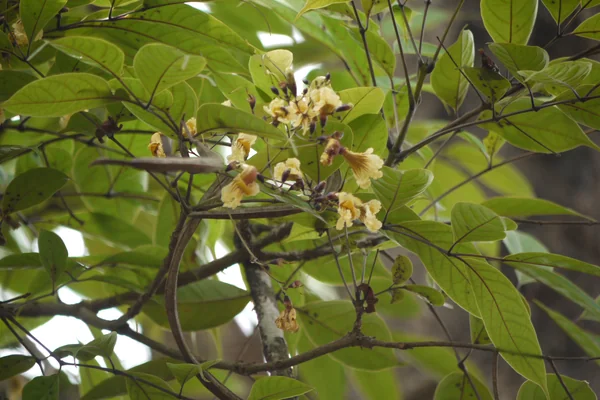
Patala (Stereospermum suaveolens) is a well-known medicinal plant used in Ayurveda for a distinctive combination of traditional actions, restorative qualities and practical herbal applications. It belongs to the Bignoniaceae family. Root bark is the main medicinal material described for this herb. Understanding the correct botanical identity and the exact plant part is important because a common herb name may refer to more than one species, while roots, leaves, fruits, seeds, bark or oils from the same plant can have very different chemical profiles.
A useful overview of Patala should therefore go beyond a short list of benefits and explain how the herb is traditionally understood, how it is commonly prepared, what modern research is exploring, and where safety limits matter. For readers researching Patala benefits, the most useful starting point is understanding the herb’s traditional role rather than treating it as a cure-all.
In Ayurveda, Patala is traditionally described with a Rasa of Tikta, Kashaya, Guna of Laghu, Ruksha, Virya of Sheeta, and Vipaka of Katu. Its Dosha relationship is commonly summarized as follows: Traditionally Kapha-Pitta balancing. These properties are used together rather than in isolation. Rasa describes the initial taste experience, Guna describes qualities such as lightness, heaviness, dryness or unctuousness, Virya reflects heating or cooling potency, and Vipaka describes the post-digestive effect. Taken together, these characteristics help explain why Patala is chosen for some patterns and avoided or modified in others.
Traditionally, Patala is most closely associated with recovery, fever traditions, inflammation and Dashamoola formulations. That does not mean the herb is a universal remedy for every condition that falls into those categories. Ayurvedic practice considers the person as well as the symptom, including digestive strength, appetite, bowel pattern, sleep, energy, age, season and constitution. For example, two people searching for the same concern may receive very different recommendations if one is depleted and dry while the other has heaviness, heat or congestion.
This individualized approach is one reason classical herbal use is more nuanced than simply matching one herb to one disease. The discussion around Patala benefits becomes more useful when traditional Ayurvedic knowledge is separated clearly from modern clinical evidence.
Ayurvedic Properties of Patala
The form of Patala also changes how it is used. Common preparations include root-bark decoction and classical compound formulas. A household food or tea, a traditional powder, a decoction and a concentrated extract should not be treated as interchangeable. Concentrated products may deliver much larger amounts of selected compounds, while traditional formulas often rely on the combined effect of the herb, the preparation method and the accompanying ingredients.
When choosing a product, it is helpful to check the botanical name, the plant part, extract ratio or standardization when provided, serving size, other ingredients and quality-testing information. Many searches for Patala benefits focus on quick results, but preparation, dose, constitution and overall health context can change how the herb is used.
Modern scientific interest in Patala often focuses on iridoids, flavonoids and antioxidant research. Researchers have also examined naturally occurring compounds such as lapachol-related compounds and flavonoids. These studies are useful because they help explain possible mechanisms and identify areas worth investigating further. At the same time, the strength of evidence can vary widely. Laboratory findings, animal experiments, small human trials and large controlled clinical studies do not provide the same level of certainty.
A careful reader should always ask what preparation was studied, who was studied, how long the study lasted and what outcome was actually measured. When comparing information about Patala benefits, look for the exact botanical species, plant part and preparation rather than relying on the common name alone.
7 Traditional Uses and Patala Benefits
For people interested in resilience, nourishment, recovery and healthy ageing, Patala can be viewed as one part of a broader routine rather than a stand-alone solution. Food quality, sleep, physical activity, stress management and appropriate medical care often have a much larger effect on long-term health than any single supplement. Herbal use can still be meaningful, especially when it is selected thoughtfully and used in an appropriate form.
The most realistic goal is to understand where Patala may fit within traditional practice and modern wellness without expecting it to replace diagnosis, prescribed treatment or essential lifestyle changes. A balanced understanding of Patala benefits includes potential uses, realistic evidence, product quality and important safety considerations.
One practical question is whether Patala works better as a traditional whole-herb preparation or as a standardized extract. There is no universal answer. Whole-herb preparations contain a broad range of compounds and are closer to many traditional forms, while standardized extracts may be designed to provide a predictable amount of selected constituents. That consistency can be useful in research and manufacturing, but a higher concentration does not automatically make a product more appropriate. The intended use, individual tolerance, accompanying medicines and quality of the product all matter.
Another common question is how quickly someone should expect to notice an effect from Patala. Traditional herbal practice rarely treats every herb as an immediate-acting substance. Some preparations are used for short-term digestive, respiratory or topical comfort, while nourishing, cognitive, metabolic or restorative herbs may be taken over longer periods under guidance. Expectations should therefore match the purpose. If a product promises dramatic results within hours for a complex chronic condition, that claim deserves skepticism.
Meaningful improvement in long-term health usually depends on several factors rather than a single herbal ingredient. People interested in Patala benefits should also consider diet, sleep, activity, stress and appropriate medical care instead of relying on a single supplement.
Patala Benefits and Modern Research
Safety is an essential part of understanding Patala. Use is commonly within formulas; prolonged fever or systemic illness should be medically evaluated. Even when an herb has a long history of traditional use, concentrated extracts can create different exposure levels from ordinary food or tea. Pregnancy, breastfeeding, childhood, older age, surgery, liver or kidney disease and the use of several prescription medicines can all change the risk profile.
People with significant medical conditions should discuss regular medicinal use with a qualified clinician or experienced Ayurvedic practitioner who can consider the full context. Research into Patala benefits continues to evolve, so claims should be matched to the type and quality of evidence available.
Product quality deserves equal attention. Herbal materials can vary with species, geography, soil, harvesting time, storage, processing and extraction. Adulteration or substitution can also occur, particularly with high-demand herbs. A trustworthy product should clearly identify Stereospermum suaveolens, state the plant part used, provide manufacturer and batch information, and ideally include testing for identity, contaminants and heavy metals where relevant. This matters because research on a correctly identified, well-characterized herb cannot automatically be applied to a mislabeled or poorly manufactured product sold under the same common name.
Product labels discussing Patala benefits should be read carefully because whole-herb powders and concentrated extracts are not equivalent.
People often search for ‘Patala benefits’ and encounter pages that list many diseases without context. A more useful way to evaluate the herb is to ask specific questions: What is the botanical name? Which part is used? What are its Ayurvedic properties? What is the traditional role of the herb? Which compounds have been identified? What kind of research exists? How do powder, tea and extract forms differ? What safety issues matter? Answering these questions provides a clearer understanding than simply collecting as many benefit claims as possible.
Understanding Patala benefits also means knowing when professional guidance is more appropriate than self-treatment.
How Patala Is Traditionally Used
It is also useful to separate supportive use from treatment. Patala may have a traditional place in routines connected with recovery, fever traditions, inflammation and Dashamoola formulations, but persistent, severe or unexplained symptoms should be assessed medically. Examples include ongoing pain, unexplained weight loss, recurrent fever, blood in urine or stool, severe breathing difficulty, chest pain, progressive neurological symptoms or symptoms that continue despite self-care. Using a herb responsibly includes knowing when not to rely on it.
When comparing information about Patala benefits, the most useful sources are those that explain both the possible role of the herb and the limits of what is known.
From a traditional formulation perspective, Patala is often combined with other herbs rather than used alone. Combinations may be chosen to enhance a desired action, reduce excessive heating or cooling, improve digestion, support a particular tissue or make the preparation more suitable for the individual. This is why a classical formula can behave differently from a single-herb capsule even when Patala is one of its main ingredients. The vehicle used with the herb, such as warm water, milk, ghee or another preparation, may also change the traditional intent of use.
Traditional explanations of Patala benefits are most meaningful when Rasa, Guna, Virya, Vipaka and Dosha effects are considered together.
Patala Safety, Side Effects and Precautions
For everyday decision-making, the most helpful approach is simple: identify the exact herb, understand the intended plant part, choose an appropriate form, use a reputable product and keep expectations realistic. Do not assume that a larger dose is better, and do not combine several concentrated products merely because each is marketed as natural. If the goal is long-term support for resilience, nourishment, recovery and healthy ageing, track how the body responds and reassess whether the herb is actually helping rather than continuing it automatically.
A balanced understanding of Patala benefits includes potential uses, realistic evidence, product quality and important safety considerations.
In summary, Patala (Stereospermum suaveolens) remains important because it brings together classical Ayurvedic knowledge, practical traditional use and continuing scientific interest. Its value is best understood through its botanical identity, the part used, Ayurvedic properties, appropriate preparation, evidence level and safety profile. For most users, the goal should not be to find a miracle herb but to understand where Patala may fit responsibly within a broader approach to health.
That depth is what makes information about Patala benefits genuinely useful for beginners, experienced Ayurveda readers and people comparing modern herbal products.