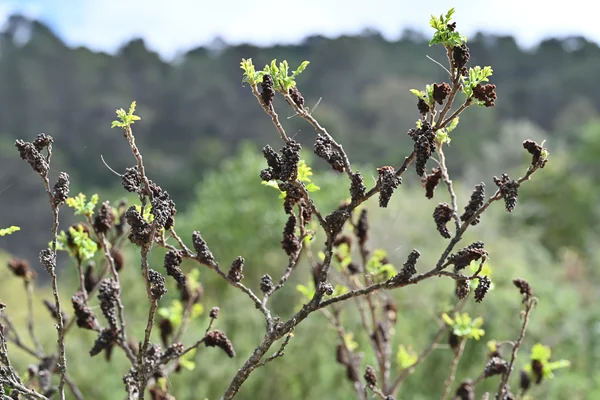
European or Sicilian Sumach (Rhus coriaria) is a medicinal plant described in traditional herbal practice. It belongs to the Anacardiaceae family, and the plant material associated with its traditional use includes Bark, Leaves, Seeds, Oil. For readers researching European or Sicilian Sumach benefits, correct botanical identification is important because medicinal actions can differ by species, plant part, preparation and dose.
The traditional profile of European or Sicilian Sumach is most closely connected with traditional herbal use, preparation guidance, safety considerations and botanical identification. These are traditional wellness contexts rather than guarantees of treatment. The way the herb is prepared and the particular part used should be considered before drawing conclusions about its effects.
Ayurvedic Properties of European or Sicilian Sumach
Ayurvedic interpretation considers Rasa, Guna, Virya, Vipaka, Dosha relationship, Agni, Ama and the strength of the individual. For European or Sicilian Sumach, species-specific values for these properties should be confirmed from a reliable Dravyaguna reference before they are used for therapeutic decisions. Botanical identity is especially important where regional names are shared by more than one plant.
7 Traditional Uses and European or Sicilian Sumach Benefits
1. Traditional use profile: Leaves and seeds— astringent, styptic.
2. Plant-part specific use: The traditional material associated with this species includes Bark, Leaves, Seeds, Oil. Different plant parts should not be treated as interchangeable because their constituents and traditional applications may differ.
3. Traditional herbal use: Traditional descriptions connect European or Sicilian Sumach with traditional herbal use. This should be understood as a historical herbal use rather than a modern clinical claim.
4. Preparation guidance: The plant is also associated with preparation guidance. The relevance of this use depends on preparation, dose and the individual using the herb.
5. Safety considerations: Traditional material also places European or Sicilian Sumach in the context of safety considerations. Evidence and safety should be considered separately from traditional use.
6. Preparation and administration: Traditional herbal practice may use powders, decoctions, juices, oils, pastes or other preparations depending on the plant part. A preparation appropriate for one part of European or Sicilian Sumach should not automatically be applied to another.
7. Identification and quality: Correct species identity, clean raw material, appropriate storage and reliable sourcing are essential for any medicinal plant. This is particularly important for European or Sicilian Sumach because common names may vary by region.
European or Sicilian Sumach Benefits and Modern Research
Leaves and seeds— astringent, styptic. Limonene, nonanal and dec-(Z)- enal were obtained from pericarp oil, whereas the leaf oil contained betacaryophyllene and patchoulane. Cembrane and beta-caryophyllene were isolated from branch and bark oil.
Laboratory findings, constituent studies and traditional descriptions can help explain why a plant attracted medicinal interest, but they do not automatically establish effectiveness in people. Human evidence, standardized preparations, dose and safety data remain important when interpreting research on European or Sicilian Sumach.
How European or Sicilian Sumach Is Traditionally Used
The appropriate preparation depends on the medicinal part being used. For European or Sicilian Sumach, references to Bark, Leaves, Seeds, Oil should be kept distinct. Traditional use may involve processing that changes the strength or tolerability of the raw material. Do not substitute a different species merely because it shares a regional or common name.
European or Sicilian Sumach Safety, Side Effects and Precautions
Use should be guided by correct botanical identification, the appropriate plant part, dose and preparation. Children, pregnancy, breastfeeding, chronic illness and concurrent medicines require additional caution. A qualified healthcare or Ayurvedic professional should be consulted before therapeutic use, particularly when the plant has strong physiological actions or a narrow safety margin.
This page is educational and describes traditional herbal context. It is not a diagnosis, prescription or substitute for individualized medical care.